

Italian sludge/post-metal trio Magnitudo to release new full-length album »Materialism« on March 20th via Dusktone; first two singles streaming now!
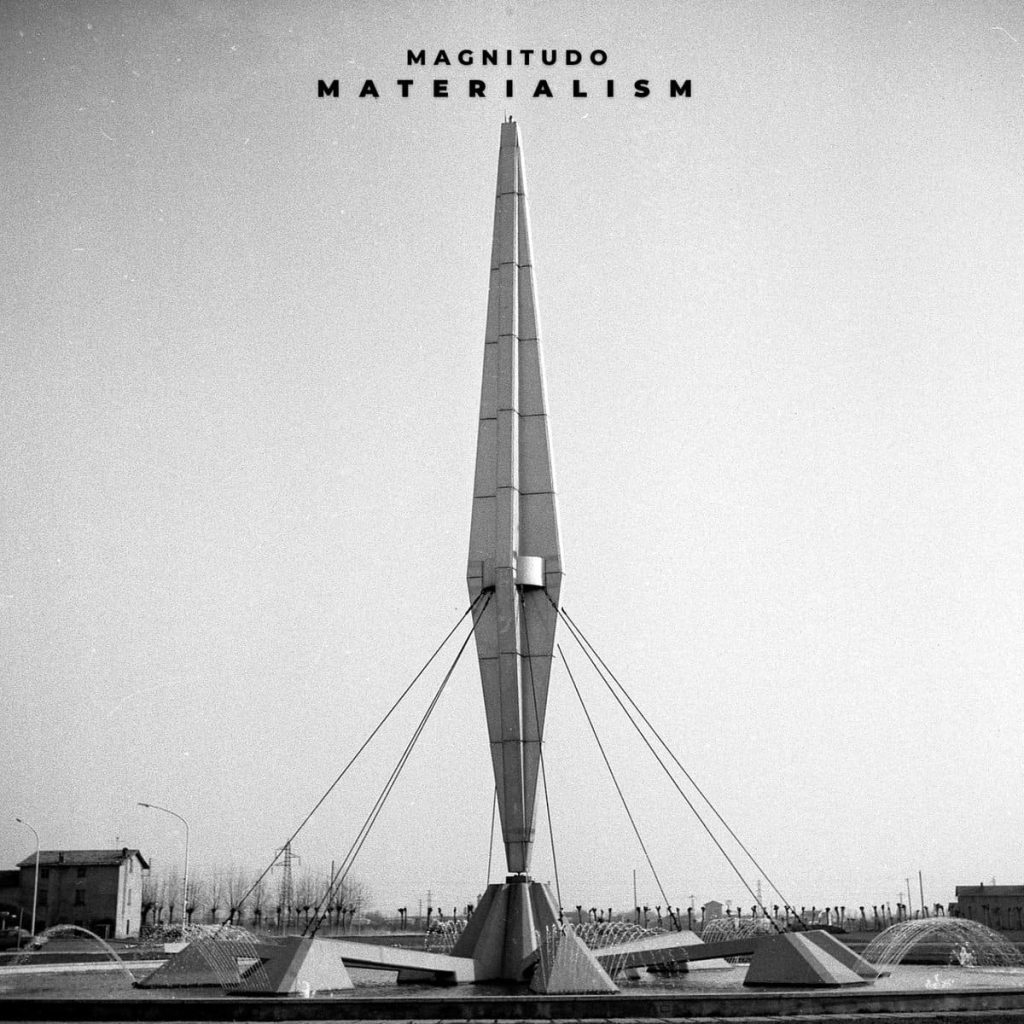
Bergamo, Italy based sludge/post-metal trio Magnitudo will release their new full-length album »Materialism« on March 20th, 2026 via Dusktone.
Check out tha album’s first two singles »The Vision« and »Hive« below!
Tracklist:
01. Auferstanden aus Ruinen
02. The Vision
03. Hive
04. Soma
05. 46-2
06. Hummingbird
07. in_sterlude
08. The Realm Of No Tomorrow
Courtesy of Metaversus PR
»Materialism« is a concept album inspired by Zingonia, a planned city on the outskirts of Bergamo founded in the 1960s as a utopian urban project and now a symbol of decay, alienation and broken promises. Magnitudo transform this setting into a metaphor for contemporary collapse: consumerism, depersonalization and the dominance of matter over spirit.
The album translates this vision into a dense and oppressive sonic mass, built on monumental riffs, crushing rhythms and claustrophobic atmospheres that reflect the weight of an industrial landscape with no future.
Dusktone will release »Materialism« on CD and digital on March 20, 2026.
Find preorders here:
dusktone.org | dusktone.bandcamp.com
Biography:
Magnitudo is a post/sludge metal trio formed in Bergamo in 2016 by Dario I. (vocals, guitar). Their sound merges post-metal and sludge with a more traditional metal structure. Apocalyptic and alienating themes complete an extreme and visceral sonic offering. The band has released two albums, »Si Vis Pacem« (2016) and »Man Against Fire« (2018), and an EP, »Scotoma« (2023). Over the years, the lineup has solidified with Antonio C. on drums and Marco B. on bass. Live, Magnitudo deliver a dense and suffocating wall of sound, conceived as a direct and brutal experience.
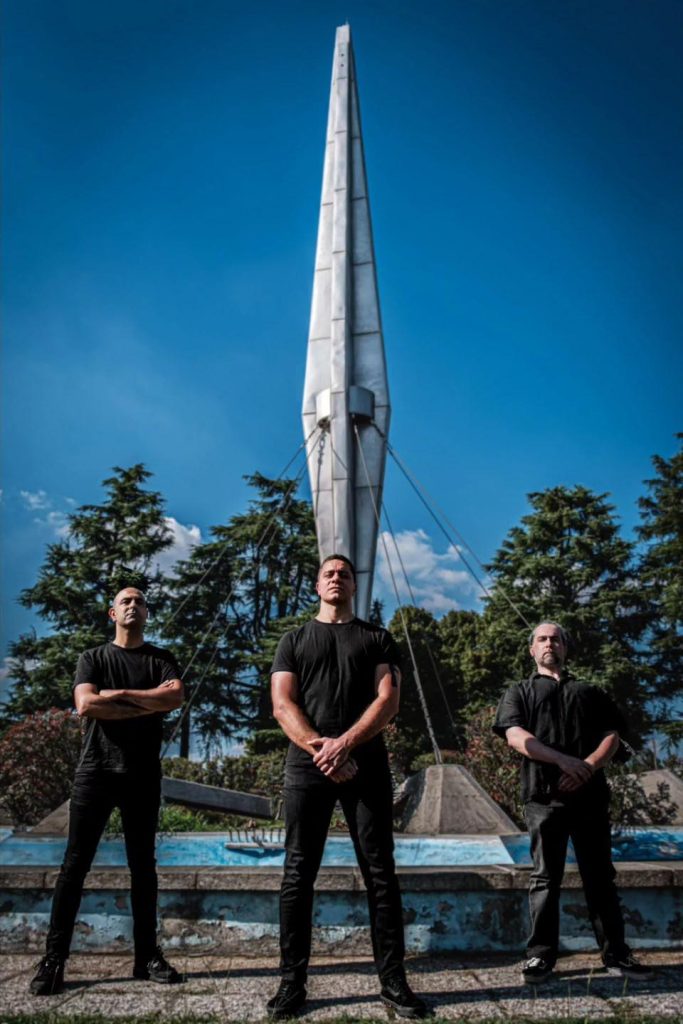
Photo by Antonio Cassella
The story behind the new Magnitudo album is a fascinating one. A concept about a city, a story of politics, a dream turned into a nightmare. A tale of two cities, as Dickens would have put it, but with the degraded one dominating reality.
“Zingonia is not a city. Primarily, this is because it sits at the crossroads of five municipalities in the lower Bergamo province – Boltiere, Ciserano, Osio Sotto, Verdello, and Verdellino; more significantly, however, Zingonia is a capitalist utopia. Conceived in the early 1960s during Italy’s economic boom by entrepreneur Renato Zingone, the project aimed to become a provincial counterpart to the “Milano 2” model. The original master plan was an all-encompassing vision that integrated industry, housing, and the future, boasting amenities such as one of Italy’s first shopping centers, a theater, a business district, and even a helipad. For a brief moment, this “city built from nothing” seemed entirely possible.
However, the dream fractured in the early 1970s when administrative hurdles and a national recession forced Zingone to abandon the project and move elsewhere. As control passed to various private interests, the original vision began to erode. Over the following decades, what was intended as a self-sufficient hub devolved into a bleak, functional periphery. By the 1980s, the decline became visible as those with means fled the area; in the infamous residential “towers” – some of which have been recently demolished – internal migrants from Southern Italy were replaced by non-EU immigrants throughout the 1990s. The subsequent narrative is one of neglect: a lack of private and public investment turned Zingonia into the so-called “Scampia of the North,” characterized by poverty, drug trafficking, prostitution, and widespread hardship.
Meanwhile, local and national politicians, joined by the mass media, exploited the situation for spectacle rather than seeking solutions. In recent years, the area has served as the backdrop for deplorable violence – from shootings to machete attacks – and humanitarian crises, such as the 2009 incident where residents were deliberately left without running water for twenty days. It is at this point that the story transcends urban planning to become deeply political and human: first, everything is built; then, the purpose is lost; and finally, the blame is placed solely on those left living among the ruins.”
Bojan Bidovc // music enthusiast, promoter, misanthrop and sometimes a journalist as well